Georgia recently became the latest country to acknowledge VA’s success in transforming veterans lives.
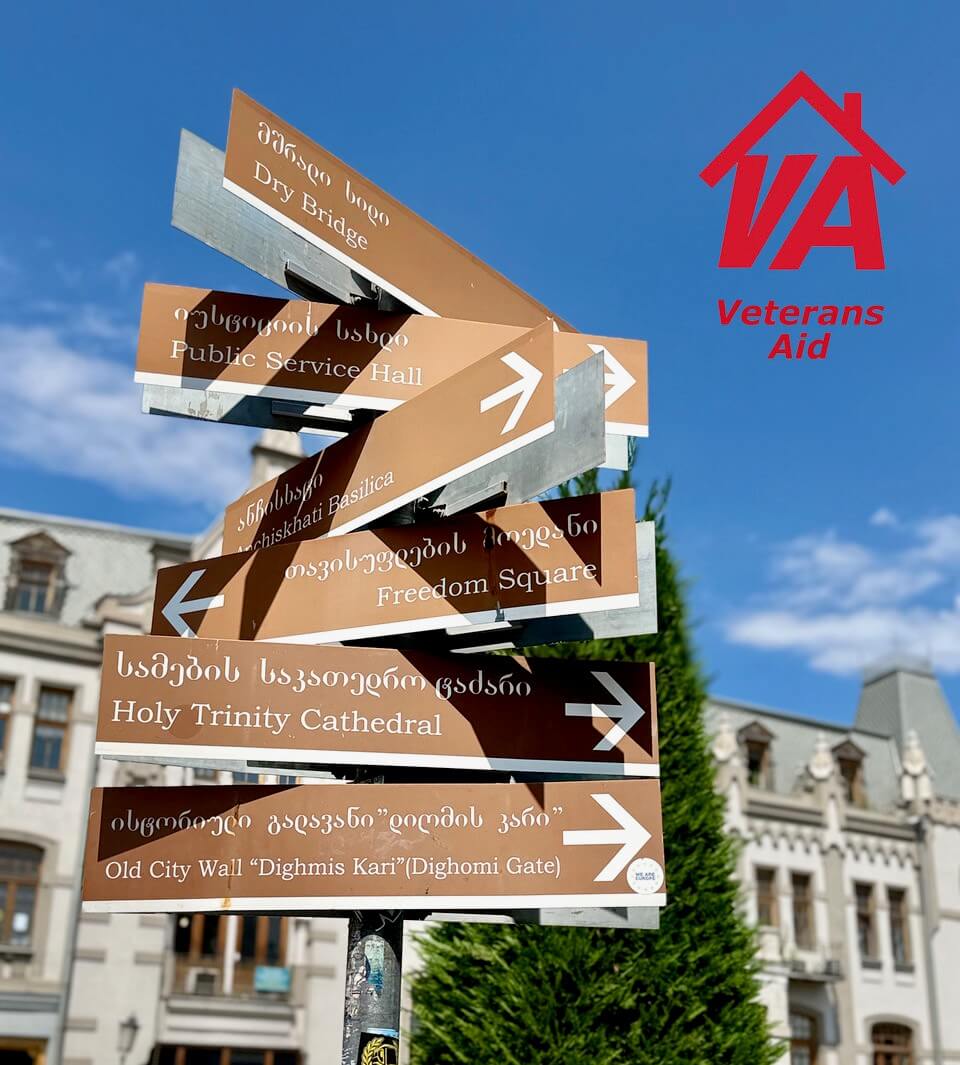
Following an invitation by the Georgia Veterans Federation, to visit and meet counterparts and interested parties, VA’s CEO Prof Hugh Milroy and a colleague spent four days in Tbilisi, discussing the universality of veterans needs and the most effective ways of ensuring their wellbeing.
Their host, GVF Acting President Michael Tsikaridze, said, “After more than three decades working with veterans, I have become increasingly convinced that dignity cannot be delivered through benefits and ceremonial recognition alone. Veterans need practical support that begins with the individual – understanding what has happened in that person’s life, what they actually need, and helping them regain independence rather than creating long-term dependency. That is why Veterans Aid caught my attention.
“Hugh Milroy’s Welfare to Wellbeing© approach is not simply another welfare programme; it reflects a philosophy that I believe has real relevance for Georgia – addressing the causes of crisis, working with the whole person and helping veterans move from dependency towards stability, confidence and wellbeing.
“I invited Hugh and his colleague to Georgia because I wanted us to learn from something that has been tested in practice, not simply import another foreign model. Our objective is to examine what works, understand why it works, and then consider, step by step, what can be adapted to Georgia’s own circumstances and the real needs of Georgian veterans. If we can combine British experience with Georgian knowledge and reality, I believe we can develop something genuinely useful – first for veterans in Georgia, and perhaps, in time, beyond Georgia.”
During their busy time in the Georgian capital the VA team met veterans from the GVF, the British Embassy, Defend Your Share of the Homeland representatives and the Georgia Peace Forum. They attended a wreath laying ceremony at the country’s famous Heroes Memorial and made a private visit – brokered by the Embassy – to Tbilisi’s tiny Commonwealth War Graves cemetery.
Prof Milroy said afterwards, “We were in that special place to visit two almost forgotten markers, commemorating British troops who had lost their lives far from home, and members of a Scottish General Support Medical Regiment (now 215). accompanied by two representatives from the British Embassy and two of our Georgian hosts. The original cemetery, that once housed these all-but-forgotten servicemen’s remains, is long gone. The markers were installed by the Commonwealth War Graves Commission in 2000, but they are rarely visited, and only by arrangement. Once however, the men they commemorate were mourned – as sons, fathers, brothers, cousins and friends, who had been sent to serve the interests of their country.
“I’ve advised on veterans affairs worldwide – briefing government advisors in Canada, academic audiences in Australia and the UK, diverse visitors from Japan, Argentina, Belgium, the USA and international audiences in Belgrade. On the surface, the issues are different, because each country has its own socio-economic landscape, its own history, political framework and experience of security and insecurity.
“Scratch the surface however, and a simple fact emerges; veterans want exactly the same things as everyone else – financial security, appropriate healthcare, employment and a decent quality of life. Many also seek acknowledgement of who they are and what they have sacrificed, hence the importance of commemorative ceremonies, but these public, civic events alone are not enough. Nor I’m afraid, is traditional philanthropy.
“The ‘top down’ handout culture that has driven veteran welfare provision for so long is about as much use as a poppy to a starving man. We were invited to Tbilisi because the Veterans Aid Welfare to Wellbeing© model struck a chord. It was seen as offering an adaptable, externally endorsed pathway that built on what veterans actually needed rather than what government or traditional welfare organisations assumed that they did.”
The visit ended with a commitment on both sides to continue working towards solutions that acknowledged the importance of building on veterans real needs and delivering sustainable, long-term solutions to their wellbeing challenges.


