‘Next steps’ for them will be towards independent living, employment and the educational or skills training required to stay on top.
Ten members of staff and clients celebrated the men’s various successes with a week of recreational and sporting activities.
Day One introduced the challenge of climbing at The Arch Climbing Wall . The facility, situated at The Biscuit Factory in Clements Road, SE16, gave the VA team a chance to scale some physical heights in a safe and friendly environment. Day Two saw the team kayaking (picture) at Canalside Activity Centre and Day Three found them boxing at Islington Boxing Club.
Substance abuse counsellor Phil Rogers, who organised the week, said, “We wanted to do something which reinforced the importance of structure, physical exercise and, most importantly, staying connected with other people in recovery. Boredom can be a huge trigger for relapse, and those with a history of alcoholism are at a much greater risk of developing heart disease. The clients who do well are the ones who cultivate their own little community of ‘positive heads.’ This week looks at addressing all three of these challenges, as well as demonstrating how much fun you can have without a drink or a drug.”
All the men taking part have experienced a crisis in their lives; something so bad that it brought them to the doors of the 82-year-old charity for Veterans in crisis to seek help. For some it was drug or alcohol addiction. Other had been homeless, served time in prison or suffered mental health problems.
The Activities Week was designed as a rite of passage allowing each man to reflect on the obstacles he has overcome, qualifications gained or addictions conquered.
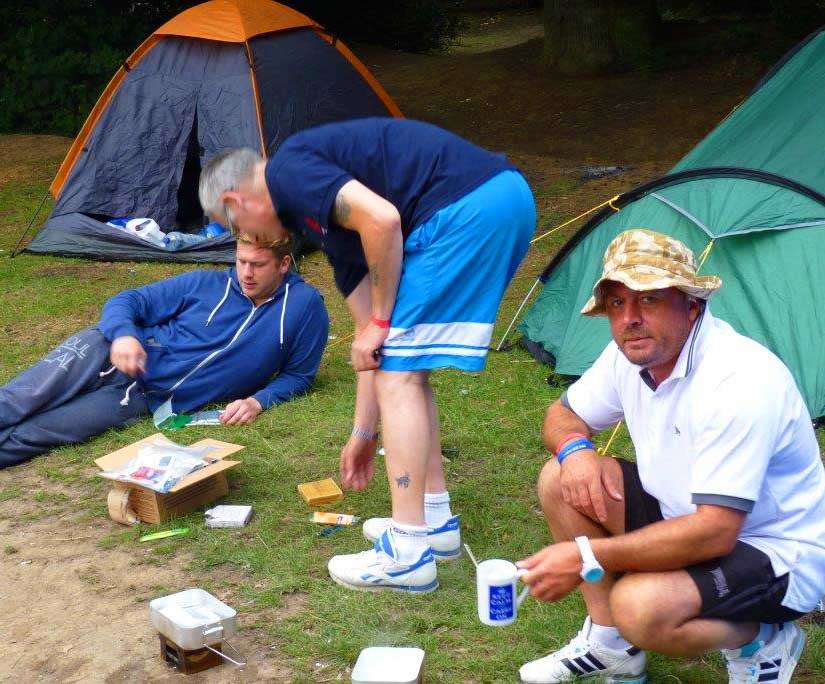
Other challenges included a bowls match against a team of Chelsea Pensioners at The Royal Hospital and the week ended with a camp-out at the Debden House Centre , in Epping Forest.
CEO Dr Hugh Milroy said, “This week of working, playing and pushing themselves together is, in microcosm, what the Veterans Aid journey is all about. People start out thinking ‘ I can’t do this’ and end up excited because they’ve done it! It’s also about doing something with support and knowing that there’s someone to encourage you and to catch you if you fall.
“This is the first time we’ve done anything formally for a group of graduates, but based on feedback so far, we’re thinking of making it a regular thing.”


