A recent grant of £60,000 from the Royal Navy and Royal Marines Charity and Greenwich Hospital (RNRMC) has enabled Veterans Aid to continue its lifesaving work with former seafarers in distress.
CEO of VA, Dr Hugh Milroy said, “This money is a lifeline for those who come to us in crisis. The seafaring veterans who seek our help are men and women with urgent and frequently life-threatening problems. Often their issues are so acute that they have been turned away by other agencies and become estranged from their families. With this vital support from the RNRMC we are able to make the swift and critical interventions that sometimes, quite literally, save lives.”
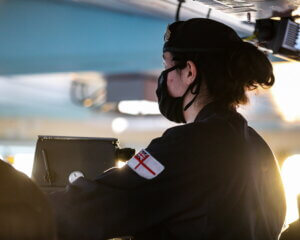
UK MOD © Crown copyright 2022
Not all veterans are former soldiers and not all are male. ‘Mary’[1] is an example. After eight-years’ service in the Royal Navy she returned to civilian life. When things started to unravel, she became dependant on drugs to cope.
She said, “I contacted Veterans Aid at the very lowest point of my life. Social services had intervened and removed my daughter from my care. At this point I overdosed deliberately and ended up in hospital. At the time I quite honestly wanted my life to end.”
Veterans Aid exists to help people like ‘Mary’; men and women who are in crisis and at great risk. But the charity’s unique ability to act swiftly and make practical interventions at point of need depends on access to funding that can be deployed to deal with emergencies.
“Situations like ‘Mary’s fall into that category, which is why grants such as that provided by the RNRMC are so important,” explains Dr Milroy. “Detox/rehab is expensive but the longer it is deferred, the worse the individual’s problems become.”
Before Veterans Aid set things in motion for her ‘Mary’s life was miserable and out of control.
“My life was a cycle of lies and desperation I was always trying to get money for my drugs which left me financially struggling, I was full of shame at what I was doing to myself and my family and my relationships with them were at an all-time low. My mother and I were constantly fighting, my daughter was miserable, unhappy and struggling at school. I could see things were getting worse and even though there had been some really awful and often dangerous experiences, I was unable to stop.”
Recalling an argument with her mother ‘Mary’ described climbing onto the roof of the house while high on drugs. She fell off, fracturing her leg and skull. “But even that wasn’t enough to make me stop, I was literally killing myself.”
After ‘Mary’ made contact Veterans Aid stepped in quickly to set a help strategy in motion and support her through it.
“My time in treatment, in one word, was lifesaving. I learned so much about why I had struggled with addictive behaviours my whole adult life. The most valuable thing I took from it was that addiction is not a quick ‘fix’ .Recovery takes ongoing work and is something I do have to work on every day. There is so much more to it than putting down drugs; it’s about learning to cope with everyday life and being honest with myself.
“The help I have received from Veterans Aid has quite simply given me back my life! I wake up every single day free from guilt and shame. My daughter is living with me again and our relationship is better than it has been for years and years! For the first time in years my family can trust me and rely on me. There is laughter and happiness in our house again. I now work a programme on a daily basis, and it has impacted all areas of my life in such a positive way.”
[1] ‘Mary’ – not her real name.


