Bob Pittam joined the Parachute Regiment (Junior Company) in 1970 and served until a chute failure brought him down to earth with a bang at the age of 21. Two weeks later he was a civilian, with a wonky knee and an interesting life in prospect.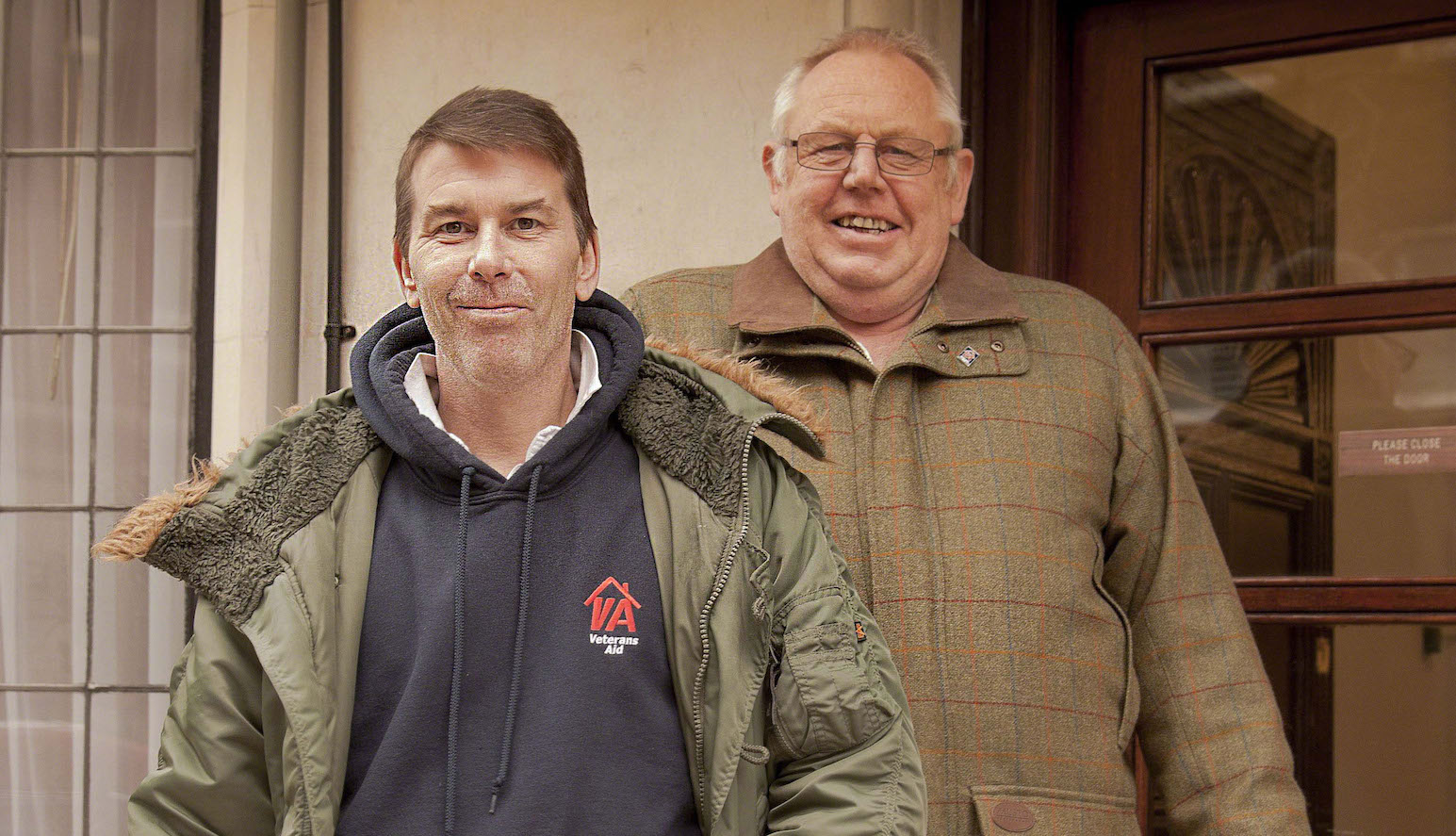
After discharge he worked as a slaughterman, ran his own business, spent several years flying ‘cattle class’ to Brazil – with 200 head of calves for company – and eventually settled in Gloucestershire, to a life of mole catching and country pursuits. And it was there that one of his customers, John Bate-Williams, put the ex-Para in touch with Veterans Aid when his life started to unravel.
Bob’s leg pain had been getting steadily worse since the mid 80s and in October 2011 he had a knee replacement. It didn’t go well. His wife Kim had a job but couldn’t drive, Bob was increasingly unable to get about and money was becoming scarce.
His six tours of Northern Ireland (one of which placed him at the infamous Abercorn Restaurant bombing in 1971) were literally a lifetime ago and while he had fond memories of his Army service, he wasn’t defined by it.
“My father was a former soldier who fought in the war and he never got any help, or wanted it – although he was disabled from the war and died a very young man in a lot of pain. I never dreamed of asking for help, I thought ‘I’ll just get on with it, and that’s it’.
“This gentleman I used to do moles for, he knew someone who ran a charity. I’d never even heard of it, but it was Veterans Aid. He said he’d see what they could do for me and eventually I ended up in London at the King Edward VII Hospital where they took me to see a specialist about repairing my leg. Fortunately it could be done – but the bad news was that I had lung cancer! So that put the mockers on everything for a year!”
Caseworker Jon Fullan had been tasked with chaperoning Bob, meeting him on arrival in London, getting him to his London accommodation, arranging transport and seeing that he got to all his hospital appointments on time before being safely returned to Paddington.
“I think the boss chose me was because of my own military background and my time in Northern Ireland. We hit it off straight away. I kept in regular telephone contact with Bob and last year, in January 2014, we got the devastating news that they’d picked up lung cancer, in its early stages, on his scan. That moved the goalposts dramatically for his knee surgery but I was told ‘We are going to support this man emotionally, financially – whatever it takes – and he is going to be your case’.”
“Bob started his cancer treatment in Cheltenham a year ago and in summer 2014, towards the end of it, I went down to give him a morale boost. It was great to see him again.”
Sadly, as the cancer responded to treatment and his tumour shrunk, the pain in Bob’s knee became unbearable. He was apprehensive – both about having further surgery and travelling up to the capital.
“Being here is horrible. I live in the middle of nowhere – in a little 400 year-old cottage surrounded by deer and furry animals. Coming up here is a real shock to my system” he jokes. “ But seriously, Jon knows where to go and arranges everything – I’d just be a blubbering mess to be truthful. Having the lung cancer and not being able to walk properly – if it hadn’t been for Jon I don’t know I’d have done.”
“As for Veterans Aid, I just cannot believe what they’ve done for me; they’ve backed me personally, financially, mentally – the whole works. Even paying for taxis to get me around. They are just fantastic.”
Barrister John Bate-Williams, the neighbor who introduced his amiable mole-catcher to the charity, later told CEO Dr Hugh Milroy, “I cannot thank you, Jon and Veterans Aid, enough for the steps you immediately took when I mentioned Bob’s predicament. It has been remarkable to see the swift and positive ‘let’s get on with it’ approach taken by VA.
“While not wanting to minimise the importance of other Service charities, I am regularly pointing out to colleagues and friends the clear difference between some of the bigger and ‘sexier’ charities, which gather large funds and then seem to wonder what to do with them, and VA with its lower profile but, in my experience, far greater impact on the practical problems experienced by some ex-servicemen.”
Bob’s New Year visit to the King Edward VII, accompanied as ever by caseworker Jon, left him with the good news that that further surgery to alleviate his knee pain was an option and he’s working closely with VA on the logistics of making it happen.
Hugh Milroy said, “Bob Pittam is a thoroughly decent human being who has worked hard all his life; age, income and location conspired to make getting the help he needed problematic, but like every veteran he was entitled to our support and he will have it as long as it’s required.
“It’s heartwarming, too, to know that we can rely on other elements of the military family, like the Union Jack and Victory Services Clubs, who have provided accommodation for Bob during these stressful visits.”
CEO Air Commodore Nigel Beet said, “The Victory Services Club has an established relationship with Veterans Aid and strongly supports the impressive work that it does for the military community. We were more than happy to help Bob by offering a Respite and Welfare Break by providing an overnight stay with breakfast.”

The Victory Services Club was established in 1907 as a charity for veterans and serving personnel, by helping Bob on this occasion highlights how the Club strive to meet their second charitable objective of relieving hardship and distress amongst veterans and the serving community. The Club is able to offer this support by utilising their spare bedroom facilities that are sometimes available.
The Club is a tri-service, all ranks private members military Club for members of the UK Armed Forces and members of the Commonwealth Armed Forces and their Allies. The Club’s origin stems from the perceived need to support soldiers who had fought in the Second Boer War. Furthermore, many historical figures have been members at the Club, including Winston Churchill who was made a Life Member in 1949.
To find out more information about the Victory Services Cub, please visit their website: www.vsc.co.uk.


