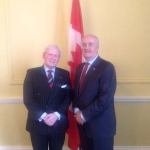
After requesting a meeting with its CEO he said, “I am pleased to have had the chance to meet with Dr (Hugh) Milroy and to learn about the positive results being achieved at Veterans Aid.”
The meeting built on established links between Veterans Aid and Canada where Dr Milroy presented a paper on From Welfare to Well-being: Turning Things Around Among Homeless Veterans in the UK in 2010.
Minister Fantino, who met Dr Milroy with Lieutenant-General Walter Semianiw, Canadian Assistant Deputy Minister for Policy, Communications and Commemoration, at Veterans Affairs Canada, takes a keen interest in successful models elsewhere.
After the meeting at Canada House Dr Milroy said, “We covered a lot of ground and it was refreshing to meet a politician who had such a good grasp of the real issues. Most veterans make a seamless transition to civilian life. They are usually robust, resilient individuals who have learned a lot though the experience of military service and add value to whatever organisation they later join.”
Veterans Aid has been in the frontline of helping veterans in crisis for more than 80 years.
It enjoys considerable success dealing with homelessness, addictions, legal issues and the consequences of social exclusion among the ex-service community. Its ethos of ‘hand up, not handout’ has enabled it not just to make immediate interventions but provide individuals with the tools to rebuild and sustain their lives.
Reintegration is an issue that exercises politicians worldwide and it was a multinational symposium on the subject that brought the Canadian visitors to the UK. The forum discussed veteran transition on an international stage amongst thought-leaders representing academia, charities, government agencies and industry.
Milroy has long maintained that the subject is misunderstood – with a focus on anticipated rather than actual problems. “It is a much-peddled media myth that our servicemen and women are leaving the Armed Forces in droves, handicapped by mental health problems and an inability to integrate into ‘civvy street’ ” he insists, “and we do no service portraying them as such. Imagine the picture it paints for potential employers and the impact on recruiting. It doesn’t bear thinking about!
“In the UK, homeless Veterans present with ‘normal’ homeless problems e.g. social isolation, family disruptions, poverty, past and present; substance misuse in family of origin and in their own life; mental health issues (rarely PTSD) and sometimes a poor military career history. The VA model concentrates on building resilience leading to sustained change.
“Veteran helping Veteran and straight-talking, a feature of military service, are used to build resilience. Positive aspects of military life help initiate the process. Much work is done in the area of substance misuse. Of primary importance is adopting a well-being approach to moving homeless people toward social inclusion, and abandoning a welfare approach.”


